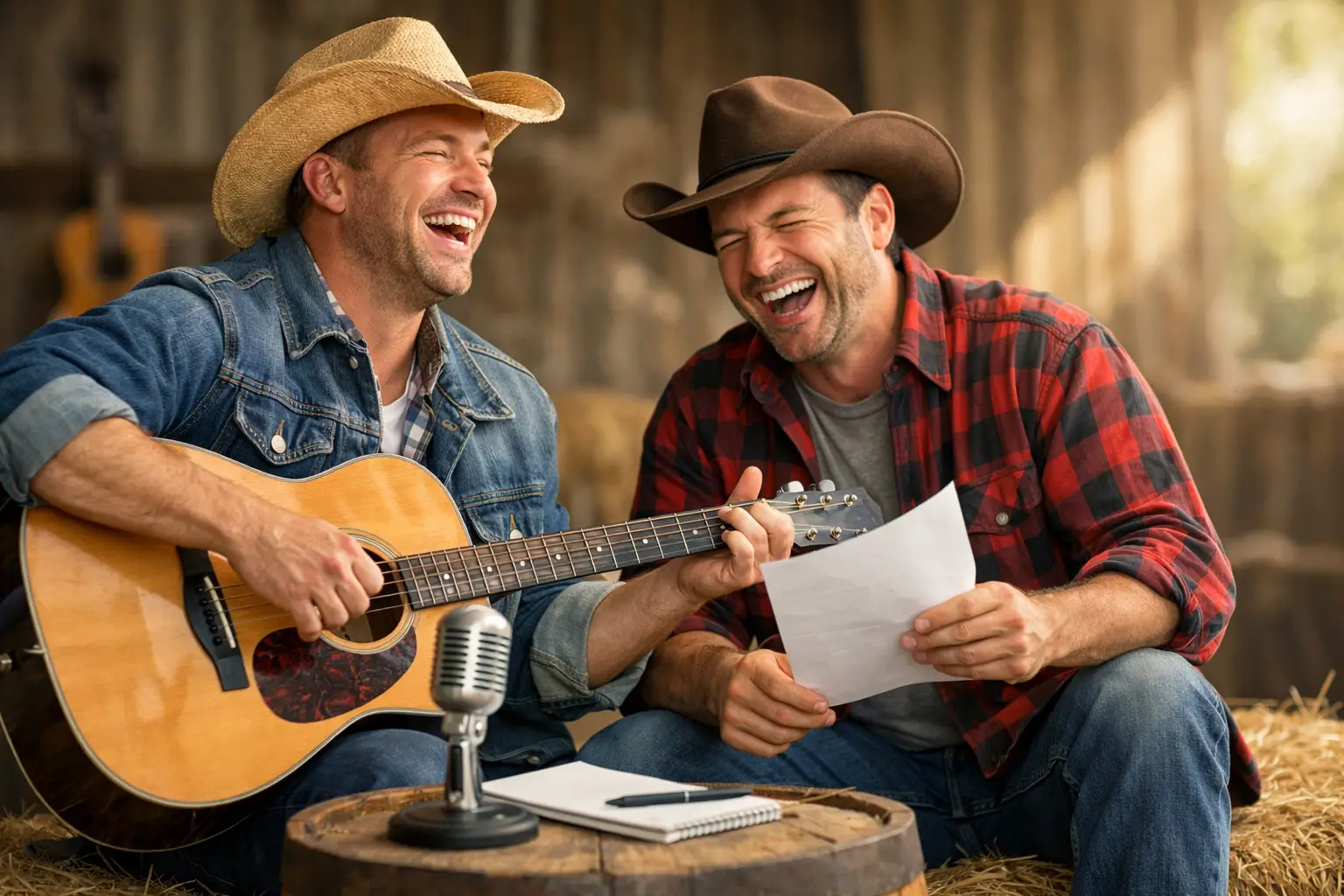
A country crowd will forgive a lot, but they will not forgive a joke that takes too long to land. That is why country parody song lyrics work best when the audience knows the tune by the first line, gets the premise by the second, and starts grinning before the chorus hits. For singers, guitar players, pianists, and one-person acts, that kind of shortcut matters. You are not trying to teach the room a new song. You are trying to win the room fast.
Country is especially good at this because the genre already speaks in plain language. It is built on recognizable characters, everyday frustration, bad decisions, pickup trucks, exes, tabs, dogs, trailers, and proud little disasters. In other words, the raw material is already halfway to comedy. A good parody just nudges it over the line without losing the musical feel people came to hear.
Why country parody song lyrics play so well live
Some genres sound clever on paper but stiff on stage. Country usually does the opposite. The rhythms are familiar, the storytelling is direct, and audiences tend to follow the setup quickly. That makes country parody song lyrics a practical weapon for performers who need a dependable laugh in bars, clubs, private events, and novelty shows.
Recognition does a lot of the heavy lifting. If the crowd already knows the melody, they do not have to spend energy figuring out where the song is going. That leaves room for the joke. It also helps the performer, because you are working with a structure that already has pacing, payoff points, and a chorus people can latch onto right away.
There is also a built-in honesty to country that makes parody feel natural instead of forced. A rock parody can get broad. A pop parody can feel gimmicky. Country can be silly, but it still sounds like a person telling the truth about a ridiculous situation. That balance is where the laughs live.
What makes a country parody actually funny
Funny is not just about changing a few words and hoping the chorus saves you. The best parody lyrics keep the bones of the original song while swapping in a new point of view that feels instantly performable.
The first thing that matters is premise. If the idea is muddy, the room gets quiet for the wrong reason. A strong country parody usually has a one-sentence hook. It might be a breakup song turned into a complaint about gas station coffee. It might be a proud small-town anthem turned into a love letter to a collapsing lawn chair. The joke should be easy to say out loud and easy for an audience to catch in one pass.
The second thing is lyric fit. Country phrasing has a bounce to it. If the parody words are too crowded, too literary, or too fussy, the whole thing feels homemade in the wrong way. Stage-ready parody needs to sing cleanly. If you have to wrestle the syllables into place, the audience will hear the struggle.
Then there is tone. The best country parody song lyrics are playful, not punishing. They poke at habits, hobbies, family life, aging, work, food, drinking, dating, and everyday chaos. They do not need to be mean to be effective. In fact, a joke usually lands harder when the target is relatable. The crowd laughs because they know the guy who would absolutely write a love song to a smoker grill.
The sweet spot between familiar and original
This is where many performers get stuck. If you stay too close to the original lyric idea, the parody feels lazy. If you go too far away, the song loses the instant recognition that makes parody useful in the first place.
The sweet spot is keeping the emotional engine of the original while changing the subject. A dramatic heartbreak ballad can become a dramatic song about losing your favorite recliner. A swaggering country hit can become a swaggering song about surviving a trip to Costco on a Saturday. The audience hears the shape of the original emotion, and that contrast creates the laugh.
It depends a bit on the room, though. A late-night bar crowd may go for rowdier material. A mixed private event often responds better to broad, clean setups everyone can enjoy. The tune might be the same, but the lyric angle should match the room if you want the joke to do its job.
Common mistakes with country parody song lyrics
The biggest mistake is writing for yourself instead of for the room. A line can look brilliant on a screen and still die on stage if the audience needs three seconds of decoding time. Live comedy in song form has to move.
Another common problem is overstuffing the lyric with references. Just because country songs can hold lots of detail does not mean every line should. One or two sharp images usually beat a whole verse of random gags. If every line is trying to be the funniest line, the song starts sounding desperate.
There is also the temptation to lean on accents, stereotypes, or easy jokes about country listeners. That is usually a cheap trade. A better parody sounds like it respects the genre enough to understand why people love it. You are not making fun of country music from the outside. You are using its style from the inside to get a bigger reaction.
And then there is the practical issue performers know well: some parody lyrics read better than they sing. This is why stage use changes the standard. If the rhyme is cute but the breath is wrong, it is not ready. If the punchline lands half a beat late, it is not ready. If the chorus feels like verbal traffic, it is not ready.
Good parody material gives performers room to perform
A useful parody lyric is not just funny. It leaves space for delivery. That means room for a raised eyebrow, a pause before the title line, a quick aside to the crowd, or a deadpan look after a ridiculous rhyme. Country is ideal for this because the genre is conversational by nature.
That also means the lyric should not try to do every job. Some songs need a louder premise and simpler lines because the performer is going to sell it with attitude. Others can carry denser jokes because the arrangement is stripped down and the audience is listening closely. There is no single formula, which is exactly why custom writing matters when a performer wants something that fits their voice, timing, and crowd.
A solo acoustic entertainer may want broad laughs that hit in under a minute. A piano act may want clever verses with room for commentary. A duo working private parties might need material that stays funny without getting too blue. The tune matters, but the use case matters just as much.
Why ready-to-perform lyrics beat starting from scratch
Most performers have had the same fantasy: take a famous country hit, swap in a few funny words, and walk onstage with a guaranteed crowd-pleaser. Then reality shows up with meter problems, weak choruses, and a second verse that sounds like it was written in a truck stop parking lot at 1:12 a.m.
Writing good parody takes more than a funny idea. It takes ear, restraint, structure, and a feel for how audiences react in real time. That is why specialized parody writing is useful. It saves performers from doing twelve rough drafts just to discover the hook was never strong enough.
A service built around performers understands the real assignment. The lyric has to fit the original feel, carry a clear comic premise, and be usable in a live act without a lot of surgery. That is very different from generic songwriting or novelty writing for the page. At Parody Song Shop, the focus is exactly that: material built for entertainers who need a recognizable tune to do more than fill space. They need it to earn a response.
How to choose the right country parody angle for your act
Start with your audience before you start with the song. If your room loves blue-collar humor, workplace chaos, marriage jokes, and small-town absurdity, country gives you plenty to work with. If your crowd skews older, nostalgia and everyday frustration usually beat hyper-specific internet jokes. If you work mixed events, clean and broadly relatable almost always travels better.
Then think about your stage personality. If you are naturally dry, the lyric can be more ridiculous because your delivery balances it out. If you are big and animated, a tighter lyric may work better because you are already adding plenty of flavor. The goal is not just to have funny words. It is to have funny words that sound like they belong to you.
Finally, choose ideas that age well enough to stay in the set. A quick topical joke may get a burst of attention, but a strong evergreen premise can keep paying off. Songs about chores, money, food, family habits, technology frustration, aging, and everyday pride tend to hold up because audiences recognize themselves in them.
The best country parody song lyrics do not feel like a novelty item collecting dust after one show. They feel like a secret weapon – familiar enough to pull people in, sharp enough to wake up the room, and playable enough that you will actually use them. If a song can make the crowd laugh and make your set easier to remember, it has already done more than most originals ever will.
Leave a Reply