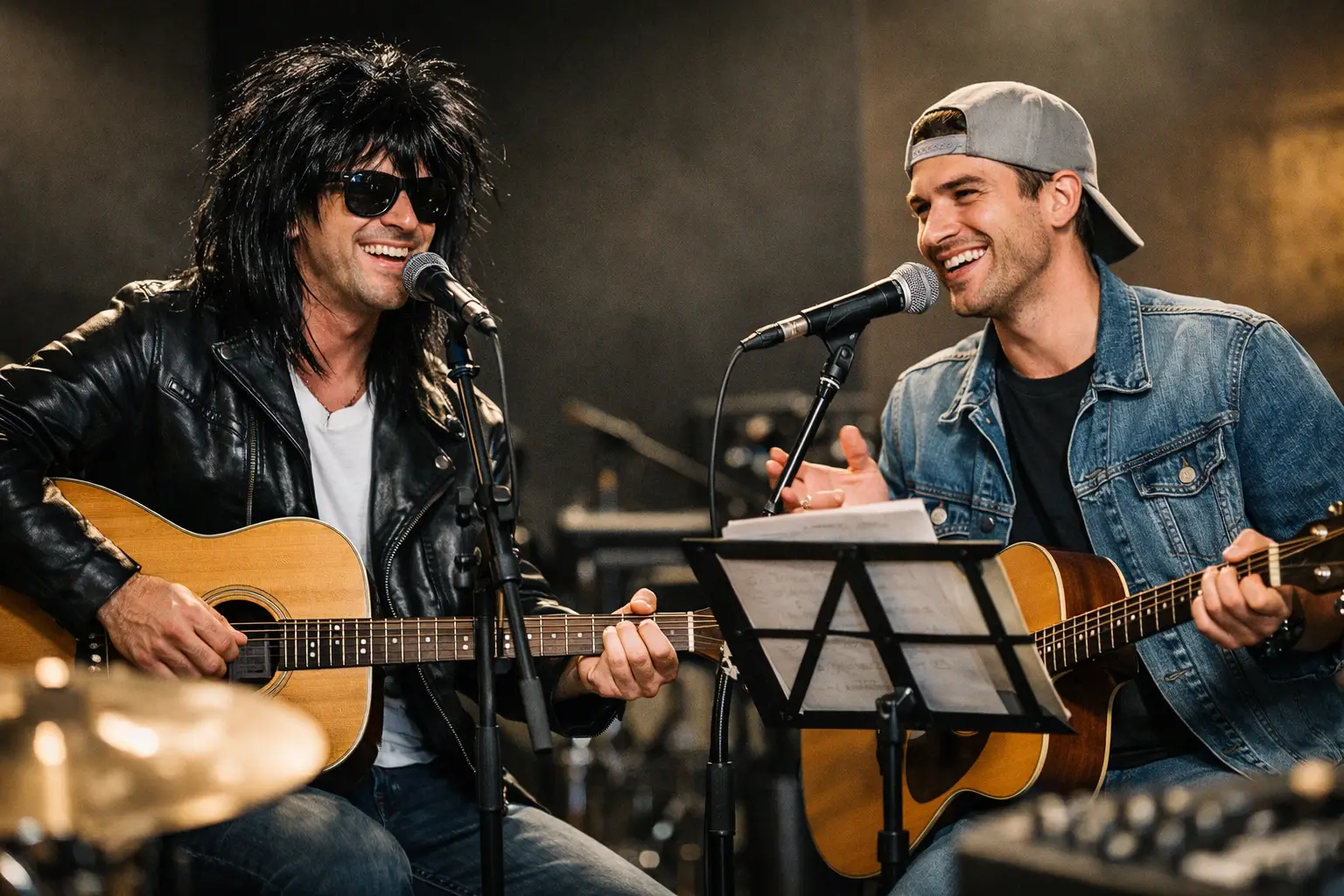
You can get a huge laugh by flipping a familiar hit into a joke song, but can musicians perform parody lyrics without stepping into legal trouble? Sometimes, yes. Sometimes, absolutely not. The difference usually comes down to whether the new lyrics are a real parody or just a funny rewrite riding on somebody else’s melody.
That distinction matters more than most performers realize. Onstage, a clever parody can feel easy – swap in a few punchlines, keep the chorus everyone knows, and watch the crowd lean in. But from a rights perspective, “funny” is not the test. A parody has to do more than entertain. It usually needs to comment on, criticize, or poke fun at the original song or the style around it.
Can musicians perform parody lyrics in public?
Yes, musicians can perform parody lyrics in public in some situations, but public performance is not a magic shield. A venue may already have blanket performance licenses for songs in its room, but those licenses typically cover performance of the underlying musical work, not the creation of unauthorized derivative lyrics.
That is where performers get tripped up. They assume, “The bar has music licensing, so I’m covered.” Maybe for playing the original song. Not necessarily for changing the words. If your version is a true parody, you may have a stronger legal argument. If it is just a comic substitute lyric set to the same tune, you may need permission.
For working entertainers, the practical answer is less glamorous than the comedy setup. You have to ask what your lyric changes are actually doing. Are they mocking the original song, the artist persona, or the sentimental style of the tune? Or are they just using a famous melody as a delivery vehicle for unrelated jokes about marriage, golf, dentists, or your hometown crowd?
The second category is where risk tends to climb.
What makes parody different from a lyric rewrite?
A real parody targets the source material. It bends the original song back onto itself. The joke depends on the audience recognizing what is being mocked.
Let’s say you take an overly dramatic breakup ballad and rewrite it to exaggerate how absurdly self-serious it is. That starts to sound like parody. You are commenting on the song’s melodrama, or maybe the genre’s habit of treating every minor inconvenience like a Shakespearean collapse.
Now imagine using that same ballad melody to sing about bad buffet food at a wedding. That may be funny. It may kill in a banquet room. But it is probably not parody in the legal sense, because the new lyric is not commenting on the original song. It is just borrowing the tune.
This is where performers should be careful with the word “parody.” In everyday conversation, people use it to mean any humorous version of a song. In legal conversation, parody is narrower. The joke has to point back at the original in some meaningful way.
Why fair use is not a guaranteed green light
When people ask whether musicians can perform parody lyrics, they are usually circling around fair use. Fair use can protect parody in the United States, but it is a case-by-case analysis, not a stage pass you print at home.
Courts tend to look at several factors, including the purpose of the new work, how much of the original was used, and whether the new version harms the market for the original or for licensed derivatives. A strong parody often transforms the source enough to support a fair use argument. A weak one may not.
And here is the part entertainers should keep in mind – being right eventually is not the same as being hassle-free now. Even if a performer believes a lyric is protected parody, that does not stop a complaint, takedown, cease-and-desist letter, or booking headache. Legal gray areas are rarely funny when they land in your inbox two hours before showtime.
The stage reality: live performance versus recording
For many bar, club, and private-event performers, live performance feels lower risk than recording and distributing a parody song online. That is often true in a practical sense, but lower risk does not mean no risk.
A live parody done once at a local show is different from posting a polished video, selling downloads, printing lyric sheets, or releasing a comedy album built on recognizable songs. The more permanent, commercial, and widely distributed the material becomes, the more attention it may attract.
That does not mean you should never perform a parody live. It means the setting matters. A one-off stage bit in a cabaret act is different from building your whole business around unauthorized rewrites of famous songs that have nothing to do with the originals.
If you are creating material you plan to repeat, promote, record, or monetize heavily, the smart move is to think beyond the laugh and consider the rights question early.
Can musicians perform parody lyrics if the song is well known?
Ironically, the better known the song, the better the audience reaction and the more obvious the rights issue. Recognition is the whole engine of a parody performance. The crowd gets the joke fast because they know the original. But famous songs also come with active rightsholders, strong brand identity, and a greater chance that somebody notices.
That does not automatically make your parody improper. It just means visibility cuts both ways. The same familiarity that helps the punchline land can also make the source material easier to identify and easier to challenge.
This is one reason custom parody writing works best when the concept is carefully shaped. A strong parody is not just a new set of rhymes crammed into a hit chorus. It has a point of view. It understands what people recognize about the source song and turns that recognition into the joke itself.
What performers should ask before using parody lyrics
Before adding a parody number to your act, ask a few plain-English questions.
First, is the lyric actually making fun of the original song, artist image, or musical style? If not, you may be in rewrite territory rather than parody territory.
Second, how much of the original are you using? The closer you stay to the exact melody, structure, and signature phrases, the more you should think carefully about whether the transformation is substantial.
Third, where will this be performed? A private party, local club, YouTube channel, recorded album, and ticketed theater run are not all the same situation.
Fourth, is this a quick novelty bit or a repeatable commercial asset in your act? The more central it becomes to your income and promotion, the more worth it it is to get proper legal guidance.
And fifth, would the average listener understand the joke without knowing the original? If yes, that may actually be a clue that the song is not parodying the original very much.
The performer’s sweet spot: funny, original, and built for the room
Most entertainers are not trying to become copyright scholars between sets. They want material that gets laughs, fits their style, and does not create unnecessary headaches. Fair enough. The good news is that you can still build comedy around familiar musical energy without being lazy about the writing.
The strongest stage parody lyrics usually do three things well. They honor the musical feel people recognize, they give the audience a clear joke fast, and they are crafted with enough thought that the humor feels intentional rather than borrowed. That is why off-the-cuff rewrites often get a quick laugh and then disappear, while polished parody material earns repeat reactions.
For a working singer, guitarist, or pianist, the bigger win is not just getting away with a joke song. It is having comedy material that actually plays. Tight setup. Clean rhyme. Strong payoff. A chorus people catch right away. That is the part audiences remember, and it is the part that makes a parody feel like a real act instead of karaoke with attitude.
If you want to use parody lyrics regularly, treat them like part of your showcraft, not a casual afterthought. Write with purpose. Know the difference between parody and a lyric swap. And if a song is going to become a serious piece of your act, it is wise to get legal advice specific to your use.
That may sound less exciting than belting a rewritten power ballad about bad wedding chicken, but it keeps the fun where it belongs – onstage, with the audience laughing for the right reasons.
Leave a Reply